Tucson by Karie Luidens

Native Seeds SEARCH.jpeg
IMG_1531.JPG

What an experience at Native Seeds/SEARCH on Saturday! I’ve got too much information swimming in my head to write about it quite yet (helped last night by some after-class ale from Barrio Brewing Co., “ARIZONA’S OLDEST CRAFT BREWERY”).

And we’re only halfway through the seed-saving course at this point, since there’s a full seven hours of workshop today as well. I’m sure there will be  plenty of thoughts to come in the week ahead. 

Arizona by Karie Luidens

Arizona sign.jpeg

Hello, Arizona! Loving your warm air during this weekend visit. The drive from Albuquerque down to Tucson yesterday meant heading south by nearly three degrees of latitude, plus rolling (up and down and up and eventually) downhill from an elevation of 5,312' to 2,389'—from the relative temperateness of the high desert to sheer low desert heat. It feels like I went from winter to spring to summer within a single week. 

Afternoon by Karie Luidens

Afternoon.JPG

It’s a fiercely bright, blue Friday, and I’m happy to be hitting the road this afternoon, heading southwest from Albuquerque to Tucson. Stay tuned for news from Arizona this weekend as I participate in Native Seeds/SEARCH’s two-day “Introduction to Seed Saving” course all day Saturday and Sunday. Per the email sent by their Education Coordinator earlier this week, here’s what I’ve got in store: 

All class materials and handouts will be provided, but please bring your favorite notebook and a pen. Of course if you have questions, seeds, or seed stories to share, bring them too! Here is an overview of what we'll be covering:

  • Stories of seeds and seed keepers
  • Saving seeds from tomatoes, chilis, lettuces, beans, sunflowers, brassicas, corn, amaranth, chard, squash, melons, gourds
  • Botany, flowers and pollination
  • Seed biology, germination
  • Basic genetics
  • Garden/farm planning for seed saving
  • Seed types: landraces, heirlooms, hybrids, GMOs
  • Community seed systems
  • Seed storage methods

Morning by Karie Luidens

Morning.JPG

Forgive the cliché, but I am not a morning person. If it were up to me, no one would be expected to get out of bed before eight o'clock, and it would be completely acceptable to stay in your PJs sipping coffee and reading books until nine or ten.

“Cool, cool, but like, I can tell from resting my chin on your knee, you’re still in your pajamas as you write this, so are we going soon, or...?”

“Cool, cool, but like, I can tell from resting my chin on your knee, you’re still in your pajamas as you write this, so are we going soon, or...?”

My dog, however, disagrees. The earlier we take him on his walk the better, as far as he’s concerned. Many, many times over the last two years I’ve told him straight to his whining snout how deeply I resented him for forcing me to don a jacket and shoes a good hour before I would even be seriously considering jeans myself. 

Just as many times, though—well, okay, not every time, but most—I’ve ended up thanking him mid-walk for getting me outside. Mornings are lovely around here. And if it weren’t for him literally dragging me out the door I’d have missed many misty dawns, mourning dove calls, invigorating winds, and shafts of lemony sunlight cresting the mountains. I may have even missed all those blossoming trees over the last week. 

So, thanks, buddy. Good boy. 

“SWEET VICTORY, THE DAY IS MINE!”

“SWEET VICTORY, THE DAY IS MINE!”

Spring by Karie Luidens

Spring (1).jpeg

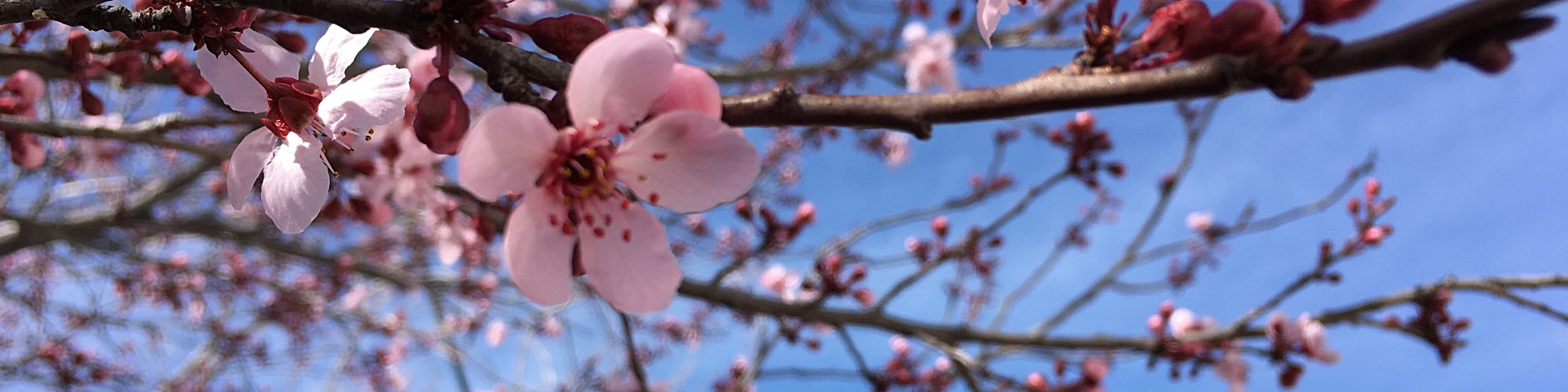
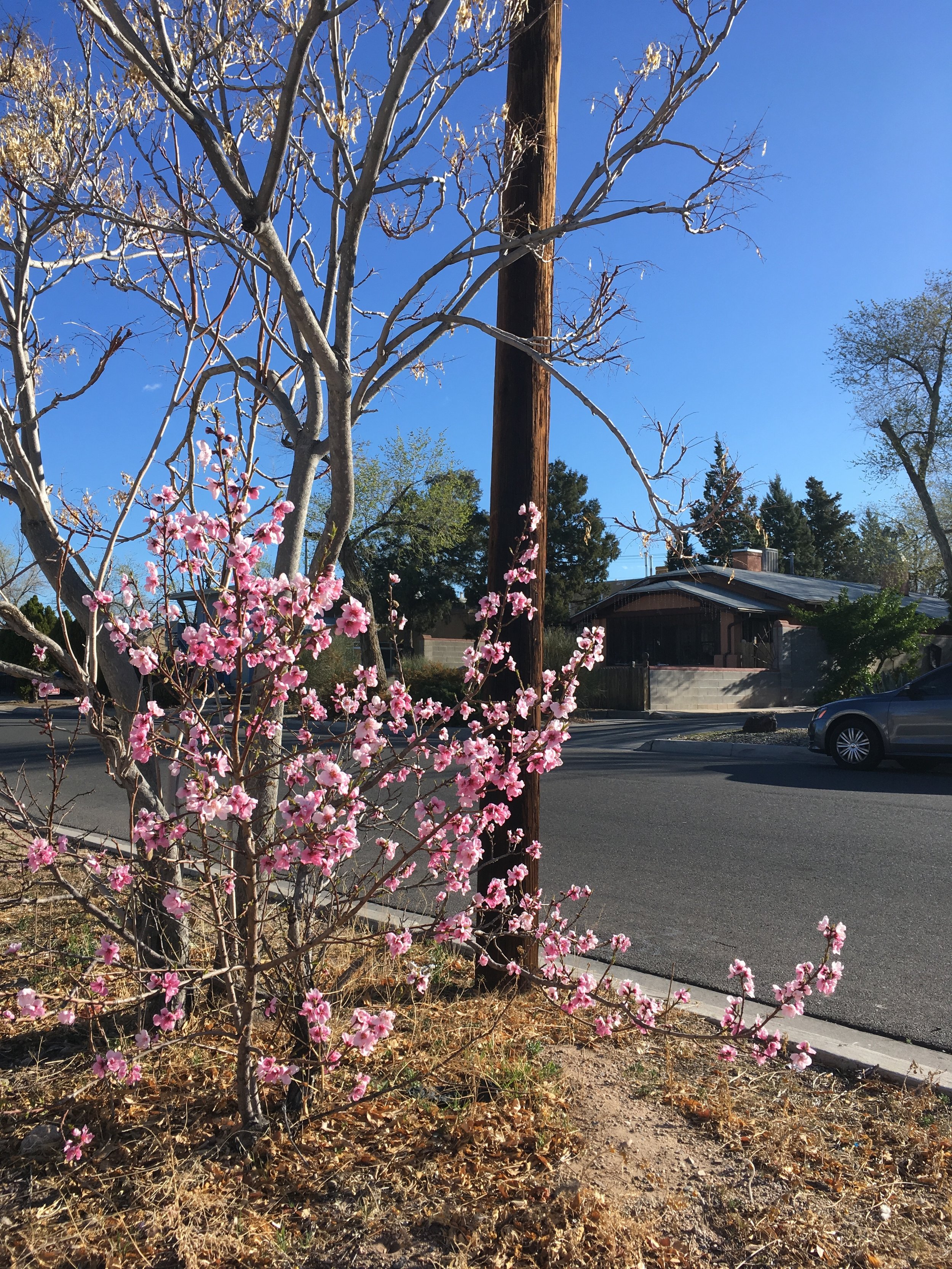
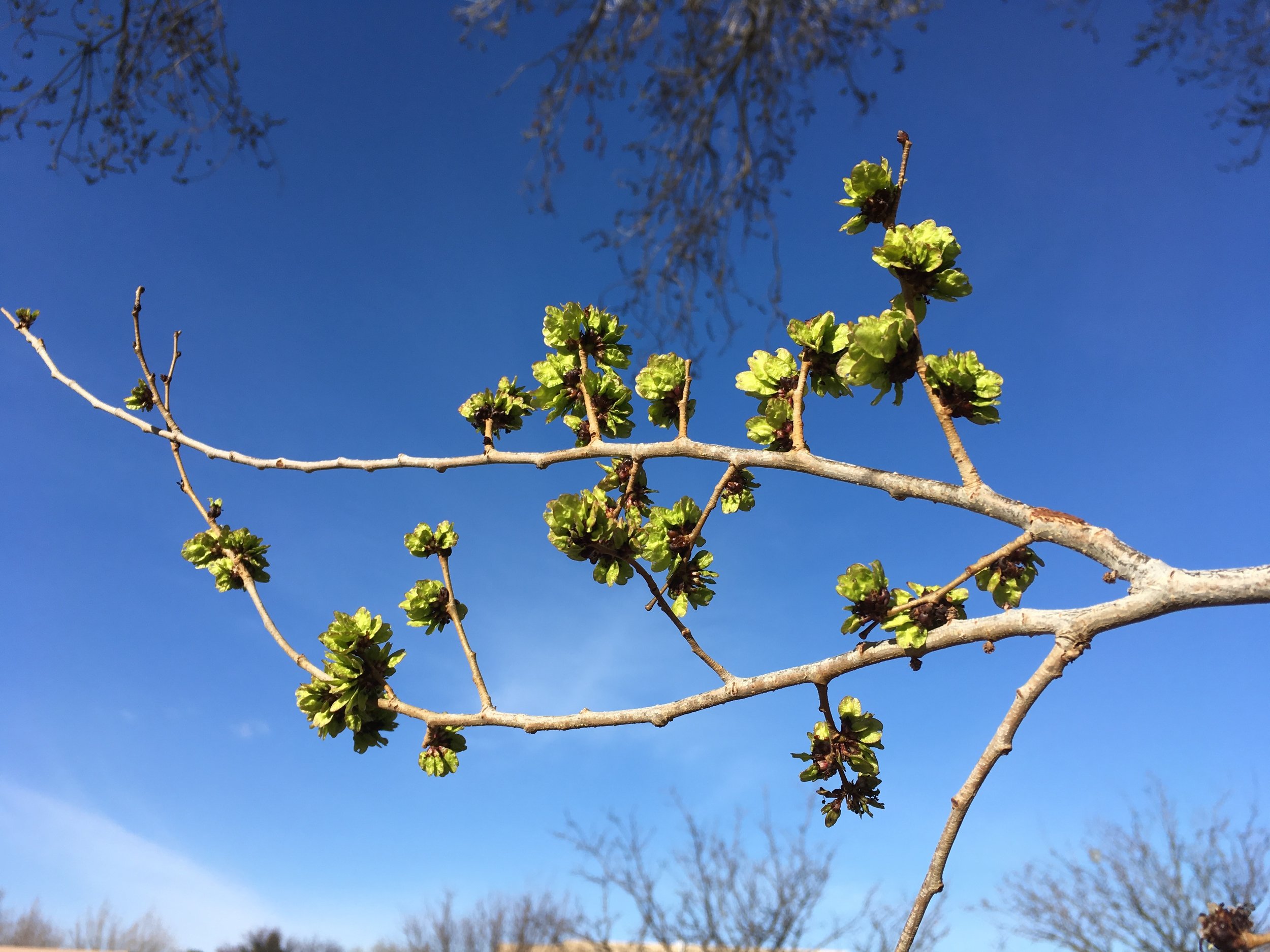
In fact, spring is all around us. Over the last week the trees of Albuquerque have budded and blossomed left and right, dotting the sky with a palette of fresh color.

Equinox by Karie Luidens

Equinox.jpg

A pause, today, to look up from the soil and notice what’s happening in the sky: the sunlight that’s been lingering longer and longer each day over the last few months is just now meeting the length of the darkness. Equal parts day and night; equinox. Spring is here. 

Fertilizer by Karie Luidens

Fertilizer.jpg

What are synthetic fertilizers, anyway? Well, as the name suggests, they’re a departure from natural processes. The question is how far they depart from nature, in what ways, and with what consequences. I’ll turn again to Michael Pollan to set the context: as he explains in The Omnivore’s Dilemma

all life on earth can be viewed as a competition among species for the solar energy captured by green plants and stored in the form of complex carbon molecules. A food chain is a system for passing those calories on to species that lack the plant’s unique ability to synthesize them from sunlight. One of the themes of this book is that the industrial revolution of the food chain, dating to the close of World War II, has actually changed the fundamental rules of the game. Industrial agriculture has supplanted a complete reliance on the sun for our calories with something new under the sun: a food chain that draws much of its energy from fossil fuels instead. (p 7)

Specifically,

a key turning point in the industrialization of our food, can be dated with some precision to the day in 1947 when the huge munitions plant at Muscle Shoals, Alabama, switched over to making chemical fertilizer. After the war the government had found itself with a tremendous surplus of ammonium nitrate, the principal ingredient in the making of explosives. [...] The chemical fertilizer industry (along with that of pesticides, which are based on poison gases developed for the war) is the product of the government’s effort to convert its war machine to peacetime purposes. As the Indian farmer activist Vandana Shiva says in her speeches, “We’re still eating the leftovers of World War II.” (p 41)

And Pollan explains where that route has led us: 

What had been a local, sun-driven cycle of fertility, in which the legumes fed the corn which fed the livestock which in turn (with their manure) fed the corn, was now broken. Now [a farmer] could plant corn every year and on as much of his acreage as he chose, since he had no need for the legumes or the animal manure. [...]

Liberated from the old biological constraints, the farm could now be managed on industrial principles, as a factory transforming raw material—chemical fertilizer—into outputs of corn. Since the farm no longer needs to generate and conserve its own fertility by maintaining a diversity of species, synthetic fertilizer opens the way to monoculture, allowing the farmer to bring the factory’s economies of scale and mechanical efficiency to nature. (pp 44-45)

...but so much for efficiency in the end:

When you add together the natural gas in the fertilizer to the fossil fuels it takes to make the pesticides, drive the tractors, and harvest, dry, and transport the corn, you find that every bushel of industrial corn requires the equivalent of between a quarter and a third of a gallon of oil to grow it [....] Put another way, it takes more than a calorie of fossil fuel energy to produce a calorie of food; before the advent of chemical fertilizer [farms] produced more than two calories of food for every calorie of energy invested. From the standpoint of industrial efficiency, it’s too bad we can’t simply drink the petroleum directly. (pp 45-46)

In other words, sure, I could easily drive to Home Depot or the gardening section of the grocery store and pick up a few bags of synthetic fertilizer. But that would mean paying for the product of fossil fuels and industrial processing, trucked in from a distant factory. How could that possibly dovetail with my mission of sustainably growing my own local food in local land?

The fact is that there’s enough plant-nourishing energy pouring in around here—showers of sunlight, piles of dry grass and raked leaves, the peels and cuttings of my own cooking. I’d much rather tend to that natural, abundant, renewable energy and ensure it’s going to good use than passively let it go to waste and then pay for environmentally costly industrial manufacturing to make up the difference.

Fertility by Karie Luidens

Fertility.jpg

We’re not just protecting and enriching the soil for the fun of it, of course. Its fertility—its ability to support and nourish plant life—is critical if we want to support and nourish our own lives with a bountiful harvest come fall. 

There are many ways to encourage fertility in the soil, some natural, some artificial. What I’ve described with regards to mulch and composting is, as Michael Pollan explains, an approach that imitates nature. 

Each of the biological processes at work in a forest or prairie could have its analog on a farm: Animals could feed on plant wastes as they do in the wild; in turn their wastes could feed the soil; mulches could protect bare soil in the same way leaf litter in a forest does; the compost pile, acting like the lively layer of decomposition beneath the leaf litter, could create humus. (The Omnivore’s Dilemma p 149)

But, needless to say, caring for the soil in this way requires that we invest time and labor. Setting up a vermiculture bin and an outdoor compost heap, maintaining their moisture levels, turning their content to aerate the innermost material, continuously separating compostable greens and browns from the rest of the household trash, feeding minced apple cores and coffee grounds to the worms every few days... 

It would be far easier, and in that sense seemingly more efficient, to forget all this. We could toss all our kitchen wastes together and toss them out; we could neglect the dirt in the backyard as mere dead ground or even dumping ground, like previous tenants did. Then one day if we decided we’d like to grow something, we could purchase synthetic fertilizer and apply a layer. Why not take that route instead? 

Compost by Karie Luidens

Compost.jpg

Step two for rich soil: incorporate organic matter. 

That layer of dried leaves is great because it not only offers protection as mulch, it gradually degrades into a mess of nutrients for a new generation of plants to soak up. 

Another excellent approach, and one that I’ve got underway, is composting your kitchen and yard scraps. All that plant material is full of carbon, nitrogen, moisture, and micronutrients; why have it hauled off as waste when you can facilitate its decomposition and return it directly to the earth? 

Mulch by Karie Luidens

Leaves.jpg

Step one for enriching soil of any texture: protecting it from erosion and compaction. 

Exposed soil is vulnerable to drying out, blowing away with gusts of wind, being washed off in flash floods, and getting pounded flat by foot traffic or driving rain. If these conditions are left unchecked or exacerbated by human activity, land can gradually be stripped down to thin dead soil or bare rock—hardly able to hold water and nutrients or host plant roots.

Happily, all of these destructive forces are mitigated by a nice protective layer of natural mulch, say, dry leaves. Easy.