Restfulness by Karie Luidens

Rest.jpg

It’s tempting to struggle and strive on behalf of these plants as they wilt in the fierce afternoon heat. But there’s only so much I can do to intervene. And the fact is that they’re already doing what they need to do for themselves, naturally: shrivel their leaves a little to minimize exposure to the sun’s beating UV rays, conserve water and therefore bow down in apparent droops. Then come evening, as shadows creep up over them and they’ve drunk fresh water, they’re able to revive a bit. They rest overnight and have somehow even grown, refortified for the next hot day. 

I need to allow myself to rest, too. After all, this hot high desert is a land of siestas, and for good reason. As in other deserts around the world, the creatures of this place know when to slow down and wait out the worst of the heat. Only mad dogs and Englishmen are foolish enough to go out in the midday sun. 

Droopiness by Karie Luidens

Tomatoes wilting.jpg

The two little tomato plants are definitely the hardest hit in this recent heat. I’ve given them (and all the other plants) an extra dose of nutrient-dense worm castings around the stem and an extra afternoon soaking to help coax them through this heat wave—101°F today! Fingers crossed they’ll pull through to the weekend. 

Openness by Karie Luidens

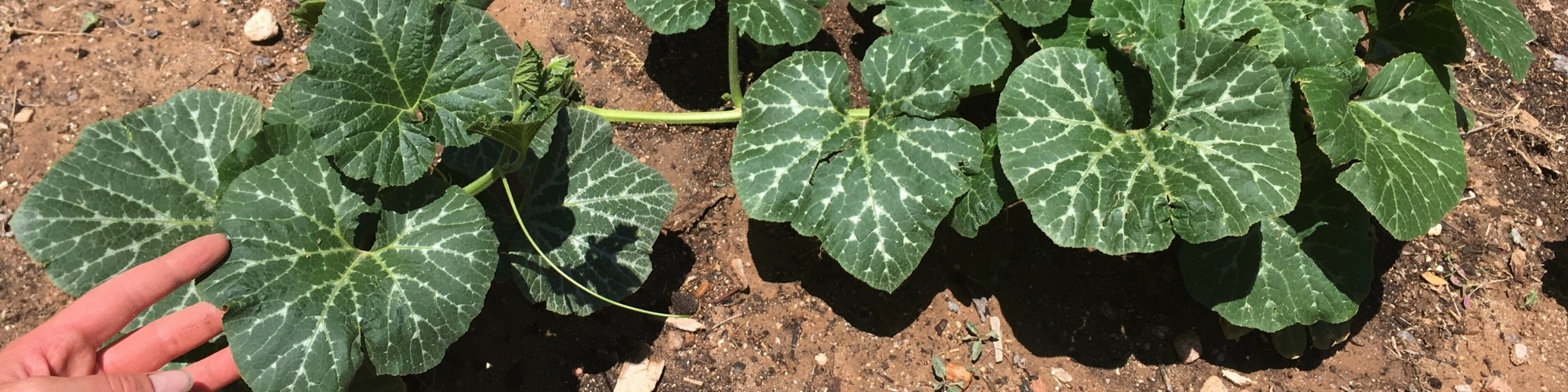
The summer solstice is still a few weeks off, but with highs soaring into the nineties and beyond the last couple weeks it already feels about as summery as it could get. The drooping leaves on the beans and tomato plants don’t look thrilled, but the squash plants are as open as ever in this heat. 

Fullness by Karie Luidens

Sunrise.jpg

Working on a professional farm has been immensely challenging, as well as enlightening in unexpected ways. One small, sweet example: the experience’s 5:30am wakeup calls have given me a new appreciation for mornings. There’s a certain magic to be found in rising with the sun. The light is soft, the air is cool, the crickets and birds are in chorus, and after watering the garden and taking care of some chores at a leisurely pace, you notice you’ve still got the full day ahead. 

Freshness by Karie Luidens

Surprise seedling (1).JPG

All of us inevitably stumble over setbacks on our path toward maturity, but we sometimes also stumble upon opportunities for a fresh start.

My sugar pumpkin didn’t make it, but suddenly in the last few days two new seedlings have poked up, as if to take its place and carry on its journey with renewed vigor. 

Surprise seedling.jpeg

Maturity by Karie Luidens

Panorama.jpg

My garden is not yet mature. Each individual plant is not yet mature. My worldview is not yet mature, and my career is certainly not yet mature. But we’re also far from immature. We’ve come a long way in the world. We engage the environment around us, do the labor that’s required of us, strive to be adaptable and empathetic. We do our best in the face of harsh conditions and unexpected turns of event. We keep growing and stretching ourselves a little further each day. 

Change by Karie Luidens

Gandhi.jpg
If we could change ourselves, the tendencies in the world would also change. As a man changes his own nature, so does the attitude of the world change towards him. ... We need not wait to see what others do.”

(Mahatma Gandhi)

Here, Gandhi is telling us that personal and social transformation go hand in hand, but there is no suggestion in his words that personal transformation is enough. In fact, for Gandhi, the struggle to bring about a better world involved not only stringent self-denial and rigorous adherence to the philosophy of nonviolence; it also involved a steady awareness that one person, alone, can’t change anything, an awareness that unjust authority can be overturned only by great numbers of people working together with discipline and persistence.

(Brian Morton)

Alternatives by Karie Luidens

Stocks.jpg
I think hard times are coming when we will be wanting the voices of writers who can see alternatives to how we live now and can see through our fear-stricken society and its obsessive technologies to other ways of being, and even imagine some real grounds for hope.
We live in capitalism. Its power seems inescapable. So did the divine right of kings. Any human power can be resisted and changed by human beings. Resistance and change often begin in art, and very often in our art—the art of words.

(Ursula K. Le Guin)

Systems by Karie Luidens

Systems.jpg
To speak of certain government and establishment institutions as “the system” is to speak correctly, since these organizations are founded upon the same structural conceptual relationships as a motorcycle [itself an abstract system composed of functional parts]. They are sustained by structural relationships even when they have lost all other meaning and purpose. People arrive at a factory and perform a totally meaningless task from eight to five without question because the structure demands that it be that way. There’s no villain, no “mean guy” who wants them to live meaningless lives, it’s just that the structure, the system demands it and no one is willing to take on the formidable task of changing the structure just because it is meaningless.

But to tear down a factory or to revolt against a government or to avoid repair of a motorcycle because it is a system is to attack effect rather than causes; and as long as the attack is upon effects only, no change is possible. The true system, the real system, is our present construction of systematic thought itself, rationality itself, and if a factory is torn down but the rationality which produced it is left standing, then that rationality will simply produce another factory. If a revolution destroys a systematic government, but the systematic patterns of thought that produced that government are left intact, then those patterns will repeat themselves in the succeeding government. There’s so much talk about the system. And so little understanding.

(Robert Pirsig, Zen and the Art of Motorcycle Maintenance: An Inquiry into Values p 102)

Vision by Karie Luidens

Vision.jpg

So here is the question. How can we as individuals and collectively as a society liberate our lives from this forced occupation, and rather than forcibly fill up the emptiness of our time with pointless busyness, do work each day that we find good and meaningful? 

Is that possible? 

Is it too much to ask, in the twenty-first century, that we structure society in such a way that everyone has that opportunity? 

Or is it inevitable that the trends of the Industrial Age and Information Age continue to force more of us into tedious, repetitive jobs in which we’re alienated from our own labor? And that we’ll compete desperately for even these tedious jobs, knowing that the alternative is unemployment and thus destitution?

Is it inevitable that most of us find ourselves devoting our lives to the bureaucratic busyness of so-called bullshit jobs

I’m struggling to envision a functioning economy in which communities are empowered to manage their own natural resources sustainably, facilitate their own energy and food sovereignty, and negotiate trade relationships on fair terms with other communities. I envision a world in which individuals aren’t dependent on megacorporations to grant them menial jobs just to scrape by, turning the majority of the population into modern-day indentured servants who are virtually voiceless within a political and economic oligarchy. 

I don’t know what that world looks like. But that’s the vision inspiring my current philosophical struggles (as farm work dominates my physical struggles).