
...And with the rain came mud, slick and deep. It shone and puddled around my garden’s seedlings. It shlucked up the farm’s dirt paths and caked up the crew’s boots. For one afternoon. Then the sun returned and it baked back into cracking-dry dirt.
Rain /

It rained on Monday afternoon. It was brief and torrid. I honestly can’t remember when we last had any rain here; New Mexico is arid by nature, and 2018 has thus far been a year of severe drought, the third driest on record. The scent of petrichor blew in before the rain itself, triggering an old, animal memory within me. Ah yes—clouds, thunder, moisture, coolness, the percussion of showers on a metal roof. Welcome.
Consuming /
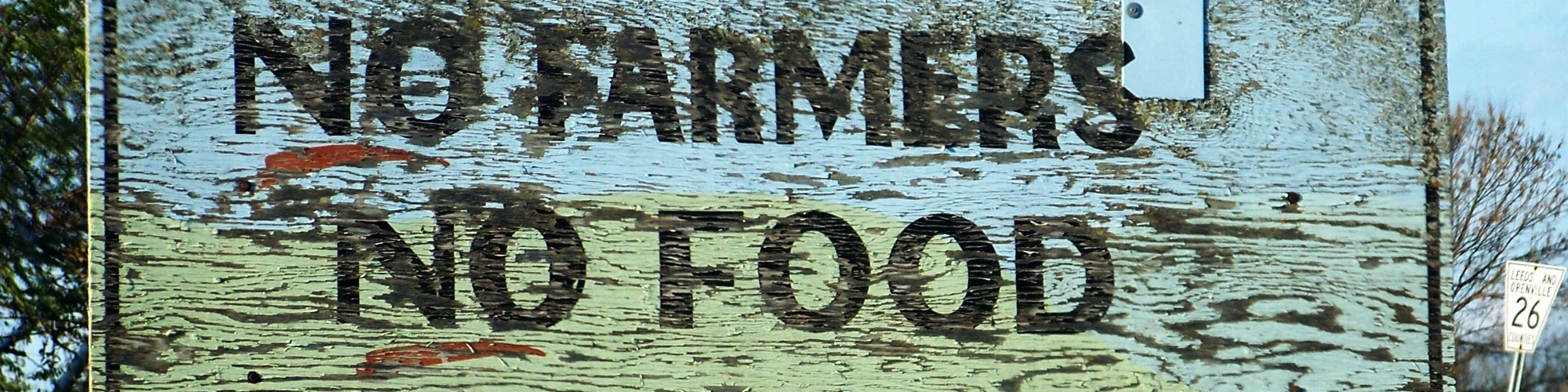
Think about this every time you take a bite of food: it started with a farm.
Unless you tended your own vegetables and livestock, foraged your own herbs and mushrooms, or hunted your own game, everything you put in your mouth was produced by someone else’s sweaty, dirty, absurd, reasonable, intelligent, analytical, artistic, “making” labor.
That might mean a small crew on an organic farm planting cucumbers and weeding around the squash. It might mean a single Midwesterner steering massive combines through endless acres of corn or wheat. It might mean a family of migrants stooping over fields of lettuce or berries and painstakingly picking each plant. It might mean factory workers churning out assembly lines of eggs or milk or slaughtered meat. Each meal or midnight snack probably brings together some of each, possibly in a form so highly processed and brightly packaged that the farm work is unrecognizable and easily forgotten.
But don’t forget the farm work that feeds you. Remember it with each trip to the grocery store, and try not to waste what they’ve produced so that you could live another day.
Making /

The small family farm is one of the last places—they are getting rarer every day—where men and women (and girls and boys, too) can answer that call to be an artist, to learn to give love to the work of their hands. It is one of the last places where the maker—and some farmers do still talk about “making the crops”—is responsible, from start to finish, for the thing made. This certainly is a spiritual value, but it is not for that reason an impractical or uneconomic one. In fact, from the exercise of this responsibility, this giving of love to the work of the hands, the farmer, the farm, the consumer, and the nation all stand to gain in the most practical ways: They gain the means of life; the goodness of food, and the longevity and dependability of the sources of food, both natural and cultural. (Wendell Berry, Bringing It to the Table p 36)
Artistic /

Farming is analytical, yes—scientific. But it’s as much art as science. As food activist Mark Winne writes,
The farmer’s passion, rarely expressed in other than a taciturn fashion to the outsider, can be apprehended in the way their eyes assess the landscape, not unlike the way a painter imagines translating that landscape’s colors and shapes to a canvas. The farmer will gently manipulate the terrain with tractor and implements, drawing on mental records of other portions of the field, soil types, and drainage. The land and changing light give the farmer his palette. “Doing contours,” as Robin [Chesmer of Farmer’s Cow farm] called it, “over the fields, alternating hay with corn with fallow earth; finding the right shape and pattern across slopes is as much an artistic expression as it is a means to control runoff and erosion.” (Food Rebels, Guerrilla Gardeners, and Smart-Cookin’ Mamas p 94)
Analytical /

There is no corporate manual for how to grow vegetables in any given climate, on any given stretch of soil, in any given year’s weather. Generations of farmers have developed a body of knowledge through trial and error, but in practice everything is unpredictable, a continuous dance of sun, rain, soil, botany, and local markets. It requires constant critical thinking and problem-solving.
Butter lettuce thrives in slightly acidic conditions, but the farm’s well water is alkaline, so we add diluted sulfuric acid to their irrigation lines. But the well water is also naturally sulfuric, and that additive could exacerbate associated root problems. The more experienced crew members must calculate the most effective trade-off as they mix fluids for the next round of seedling transplants, and keep track of their decisions today and the results next week to inform the measurements they use next month.
The greenhouse cucumbers have thrived all spring, but the recent heat wave has overwhelmed the plants and rendered some of the latest fruit rubbery. As we harvest them by hand, we give each a gentle squeeze and make a judgment call on which could make it to market and which should go directly to the compost bin, a tragic and costly waste.
Meanwhile the basil is growing rapaciously and looks beautiful, but if we allow it to get too big in this heat it could develop a bitter flavor. The tomatoes need to be stored in a cooler to last through soaring afternoon temperatures, but if they’re kept too cold they’ll become grainy and unpalatable. The netting over the rows of chard protects tender leaves from rabbits but risks trapping too much heat and frying them as the season progresses. Most of the zucchini are still too small and tasteless to harvest on Friday, but they grow so fast that by Monday some of them might become too large and watery to be worth selling. The onion starts have been separated and are ready to transplant to the field, but the clay soil has hardened more than we expected and now needs to soak overnight, causing delays that could have ramifications for the remainder of the growing season.
This is life on a small family farm with a crew of six. I’m the newest, to this particular farm and to farming in general, so I’m the last person expected to make any of these analyses. Instead I watch and wait and do as I’m told and try to absorb as much knowledge as I can by observing everyone’s thought processes. And behind the scenes I know that the farm’s co-owners are making even more decisions that we employees will never see: what crops will be profitable at the growers’ market this year, how much of each seed variety to purchase, which to plant in the sandy versus the clay-rich fields, what to charge for a ten-pound flat of heirloom tomatoes, which local restaurants will buy our extra lettuce heads this week or be willing to take fewer cucumbers than they ordered because of the unexpected rubbery effect, which co-ops will purchase eggplants and peppers when they start fruiting later this summer, when the USDA inspector will visit to check records and recertify their organic status, which landowners will renew their leases on which acreage.
In short, this work requires as much business savvy and botanical expertise and analytical skill as anyone could muster in any career. I can’t fathom that my past office jobs could command more respect or higher hourly wages than helping to run a farm, when all I did was sit in an air conditioned office typing at a leisurely pace.
Intelligent /

I’ve always assumed that sweaty, dirty, laborious work was to be avoided, not just because it was difficult but because it was somehow inferior to white collar work. I realize how horribly classist that sounds, but why deny the idea I must have held subconsciously all these years? Manual labor was rote and repetitive. It had no glamour or prestige. Dirt was lowly—dirt cheap, dirt poor, dumb as dirt. Why stoop to that when the rhetoric of my education has been one of lofty ambitions, upward mobility, climbing ladders, ivory towers? That, supposedly, is the realm of the intelligentsia.
Well, ten days of working on a farm have challenged my intellect more than any given two-week period in most of the office jobs I’ve held. Those jobs required verbal skills—emails in, emails out, phone calls taken and documents drafted in between. This job requires those skills as a baseline, plus the rest of my bodily senses, my constant precise attention to the elements, my deliberation, my dexterity, my strength, my tolerance for heat and heft, my endurance through long days of lifting, carrying, planting, and pulling. Farm work seems to exist at the intersection of every kind of mental and physical intelligence humans possess.
Reasonable /
Why does anyone do anything?
What motivates us to get up in the morning?
What sustains us through our days’ work?
What helps us sleep at night or keeps us lying awake, haunted by doubts or anxieties, heaviness or emptiness?
What I’m saying is, regardless of what sort of work I’ve been groomed to do in my life thus far, if I haven’t found it fulfilling, why on earth should I keep doing it? Why should I sit in an air conditioned office typing at a leisurely pace for the duration of my adult life when I’m capable of so much else, so much more?
Why wouldn’t I challenge myself to try a new kind of work? Even if it’s sweaty, dirty, and laborious. Especially if it’s those things.
Absurd /

Why am I sweating it out and getting dirty with manual labor this summer? Why am I roasting outside under the New Mexican sun, planting and picking vegetables? I’m a pasty northerner with a liberal arts degree and a resume of white collar jobs. I’ve been paid more per hour to sit in an air conditioned office typing at a leisurely pace. Why did I voluntarily leave that behind and pursue a harder, hotter, rougher existence?
Fields /

My new employers at the family farm have more than greenhouses. They’ve got fields—expanses of newly-tilled and nutrient-fortified dirt primed for summer planting. After a couple days in the greenhouse I got to spend one outside under the sun (with a wide-brimmed hat and a slathering of SPF 50).
The heat outside was intense as our five-person crew prepared row after row of irrigation infrastructure all morning, then hand-planted cucumber seeds all afternoon. But at least it was a dry heat. Instead of feeling sheets of sweat creep down my skin all day, I found dirt everywhere that night: caked in my eyebrows, dusted into my hairline, blackening the snot I sneezed out, matted thinly up each arm, ground deep into my fingernails. Sweat and dirt have become my new epidermis.