An homage to literary influences͏‌ ͏‌ ͏‌ ͏‌ ͏‌ ͏‌ ͏‌ ͏‌ ͏‌ ͏‌ ͏‌ ͏‌ ͏‌ ͏‌ ͏‌ ͏‌ ͏‌ ͏‌ ͏‌ ͏‌ ͏‌ ͏‌ ͏‌ ͏‌ ͏‌ ͏‌ ͏‌ ͏‌ ͏‌ ͏‌ ͏‌ ͏‌ ͏‌ ͏‌ ͏‌ ͏‌ ͏‌ ͏‌ ͏‌ ͏‌ ͏‌ ͏‌ ͏‌ ͏‌ ͏‌ ͏‌ ͏‌ ͏‌ ͏‌ ͏‌ ͏‌ ͏‌ ͏‌ ͏‌ ͏‌ ͏‌ ͏‌ ͏‌ ͏‌ ͏‌ ͏‌ ͏‌ ͏‌ ͏‌ ͏‌ ͏‌ ͏‌ ͏‌ ͏‌ ͏‌ ͏‌ ͏‌ ͏‌ ͏‌ ͏‌ ͏‌ ͏‌ ͏‌ ͏‌ ͏‌ ͏‌ ͏‌ ͏‌ ͏‌ ͏‌ ͏‌ ͏‌ ͏‌ ͏‌ ͏‌ ͏‌ ͏‌ ͏‌ ͏‌ ͏‌ ͏‌ ͏‌ ͏‌ ͏‌ ͏‌ ͏‌ ͏‌ ͏‌ ͏‌ ͏‌ ͏‌ ͏‌ ͏‌ ͏‌ ͏‌ ͏‌ ͏‌ ͏‌ ͏‌ ͏‌ ͏‌ ͏‌ ͏‌ ͏‌ ͏‌ ͏‌ ͏‌ ͏‌ ͏‌ ͏‌ ͏‌ ͏‌ ͏‌ ͏‌ ͏‌ ͏‌ ͏‌ ͏‌ ͏‌ ͏‌ ͏‌ ͏‌ ͏‌ ͏‌ ͏‌ ͏‌ ͏‌ ͏‌ ͏‌ ͏‌ ͏‌ ͏‌ ͏‌ ͏‌ ͏‌ ͏‌ ͏‌ ͏‌ ͏‌ ͏‌ ͏‌ ͏‌ ͏‌ ͏‌ ͏‌ ͏‌ ͏‌ ͏‌ ͏‌ ͏‌ ͏‌ ͏‌ ͏‌ ͏‌ ͏‌ ͏‌ ͏‌ ͏‌ ͏‌ ͏‌ ͏‌ ͏‌ ͏‌ ͏‌ ͏‌ ͏‌ ͏‌ ͏‌ ͏‌ ͏‌ ͏‌ ͏‌ ͏‌ ͏‌ ͏‌ ͏‌ ͏‌ ͏‌ ͏‌ ͏‌ ͏‌ ͏‌ ͏‌ ͏‌ ͏‌ ͏‌ ͏‌ ͏‌ ͏‌ ͏‌ ͏‌ ͏‌ ͏‌ ͏‌ ͏‌ ͏‌ ͏‌ ͏‌ ͏‌ ͏‌ ͏‌ ͏‌ ͏‌ ͏‌ ͏‌ ͏‌ ͏‌ ͏‌ ͏‌ ͏‌ ͏‌ ͏‌ ͏‌ ͏‌ ͏‌ ͏‌ ͏‌ ͏‌ ͏‌ ͏‌ ͏‌ ͏‌ ͏‌ ͏‌ ͏‌ ͏‌ ͏‌ ͏‌ ͏‌ ͏‌ ͏‌ ͏‌ ͏‌ ͏‌ ͏‌ ͏‌ ͏‌ ͏‌ ͏‌ ͏‌ 

The publishing journey continues…

A sneak peek of the book's cover design...

We’re only two months away from the release of IN THE END, and the team at Left Field Publishers has been hard at work transforming the manuscript into a book! Art direction, cover design, layout, copy editing—it’s all coming together.

Meanwhile, I’ve been reflecting on the many authors who influenced me as I wrote this story. Today, I’m paying tribute to a few such thinkers and their work.

Amélie Nothomb

For starters, there’s Amélie Nothomb.

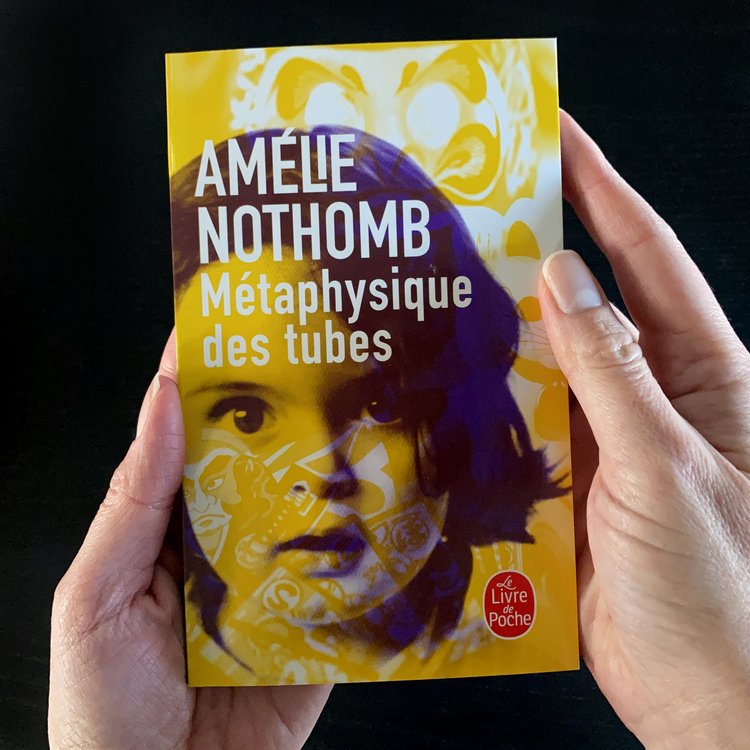
Her book MÉTAPHYSIQUE DES TUBES is a thin, floppy paperback, a “livre de poche” that slips into the back pocket of your jeans. But when I read it for a college French class, it blew my mind. Who was this zany Belgian author, and where did she get the audacity to write an entire memoir about her infancy? The book concludes when she’s barely three years old—as if anyone could remember life before age three.

MÉTAPHYSIQUE attempts the impossible: Capturing preverbal consciousness in words.

Nothomb inspired me to plumb my own memory for the earliest glimmers of self-awareness. How did the world feel before I experienced any context beyond my own body? What theological assumptions came naturally to my toddler self? That’s where my own memoir opens: In the beginning…

Marjane Satrapi

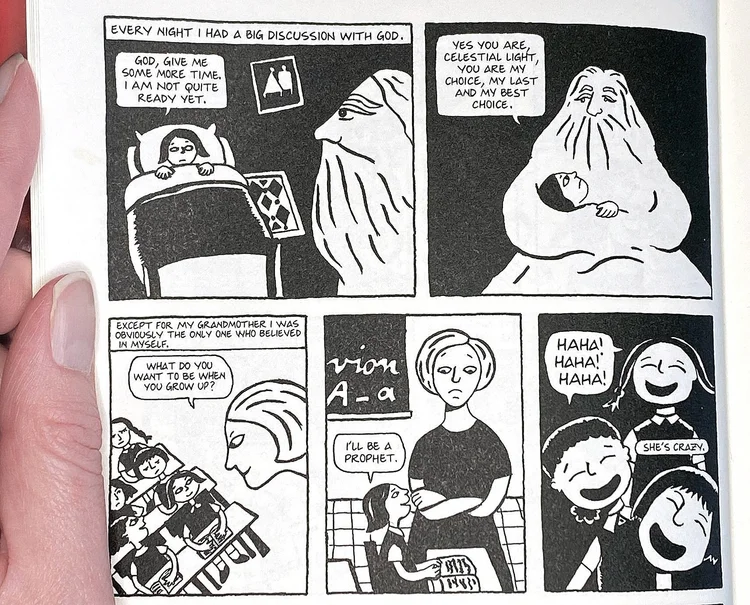
Marjane Satrapi is known for her depictions of history rather than theology: her graphic memoir PERSEPOLIS follows her coming of age through Iran’s Islamic Revolution in the late 1970s.

But the book’s opening pages also give an intimate look at her childish understanding of God—not as a politically contentious concept, but as a personal friend.

Reading PERSEPOLIS in college, I instantly recognized the way this kid took for granted that God was both at her side and on her side. I was once a kid like that, too.

If Amélie Nothomb inspired me to stretch back to my earliest memories, Satrapi gave me permission to describe how God felt to me when I was growing up, rather than just analyzing my beliefs from an adult perspective.

Craig Thompson

I didn’t encounter Craig Thompson’s work until after I finished writing IN THE END, but I’m including him as an honorary literary influence because, oof, his graphic novel BLANKETS captures so much about my own experiences as a church kid.

He grew up a decade earlier and a thousand miles west of me. Still, we might as well have been sitting next to each other on Sunday mornings. (And at Wednesday night youth group, and for annual church retreats…)

Check out Craig Thompson’s website for more about BLANKETS and his other work.

Stephanie Stalvey

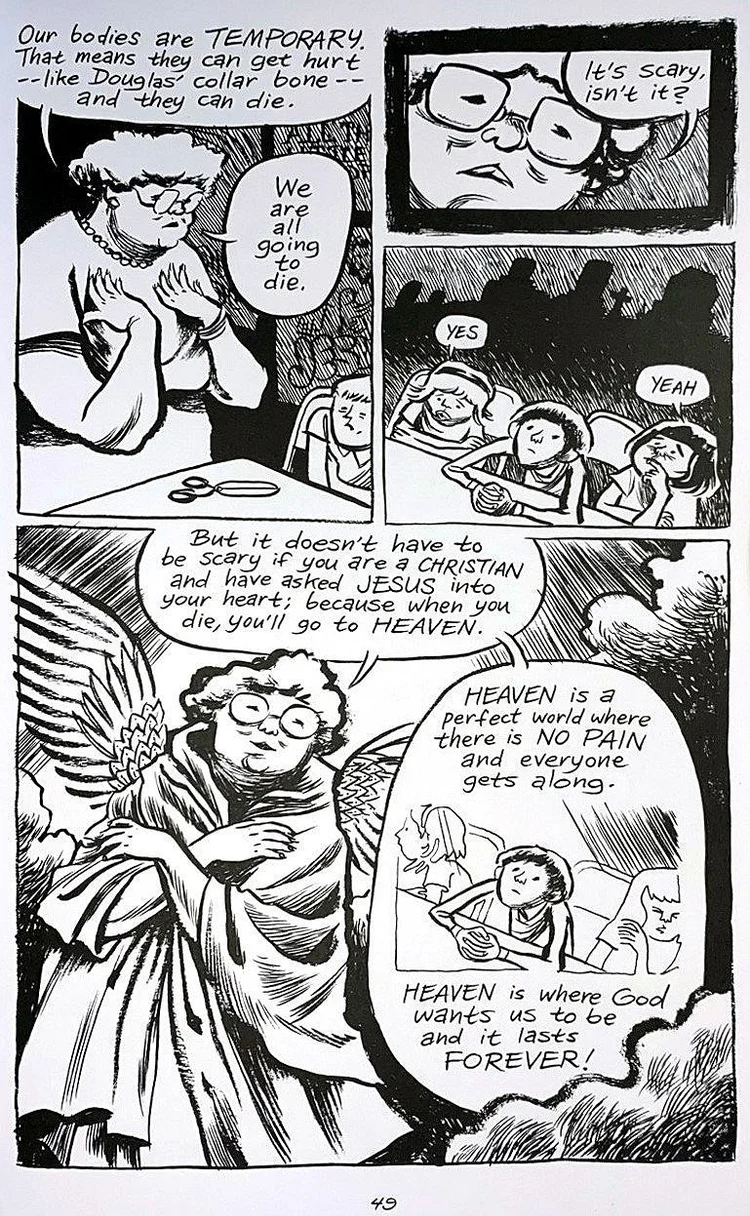
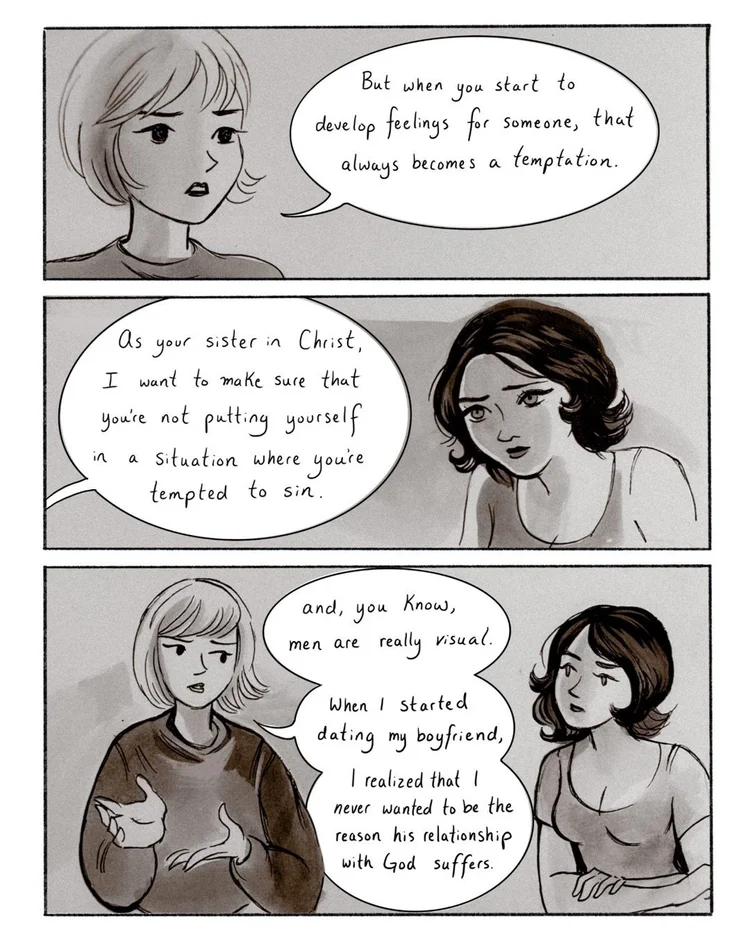
Stephanie Stalvey is a writer and artist who’s currently developing a graphic memoir called PURE. The story is so devastatingly relatable, I’m spotlighting a scene even before Stephanie finishes the rest of her book.

I didn’t learn the term “purity culture” until years after I’d absorbed its principles. But it definitely colored my adolescence, from abstinence-only youth group lessons in high school, to the buzz around “kissing dating goodbye” in my college dorm. This conversation from PURE echoes some of my own scenes from IN THE END.

Visit Stephanie Stalvey’s website for more thoughtful visual storytelling about purity culture and deconstruction. (And thank you to Stephanie for giving me permission to share some of her artwork this way!)

Jostein Gaarder

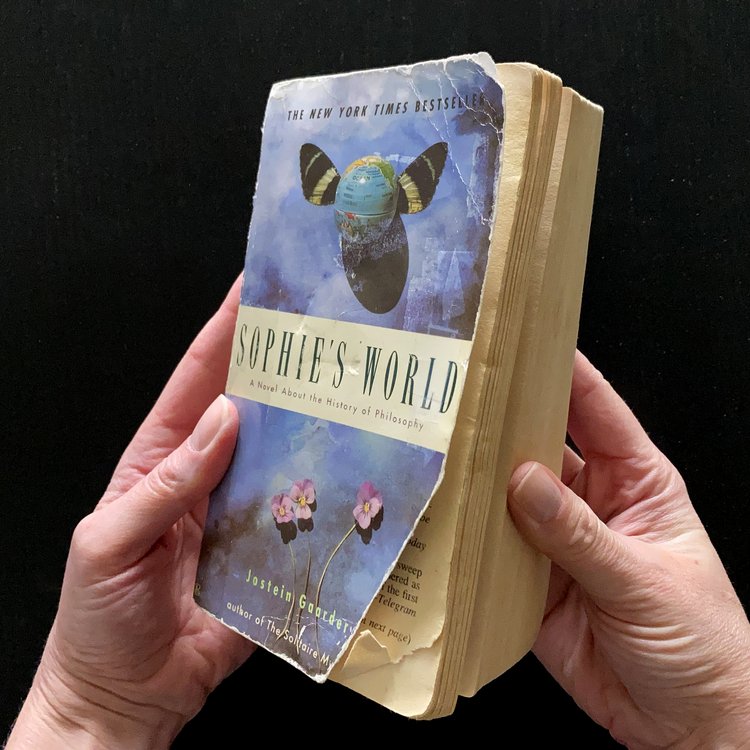
Please enjoy this well-worn copy of Jostein Gaarder’s bestselling SOPHIE’S WORLD: A NOVEL ABOUT THE HISTORY OF PHILOSOPHY. Its thickness corresponds to the grandness of its ambitions: a survey of Western philosophy from Socrates to Sartre, disguised as a mystery novel.

The eponymous Sophie is a teen who’s compelled to relinquish familiar ideas to ask the hard questions, starting with two big ones: Who are you? Where does the world come from?

Even if you aren’t raised in a fire-and-brimstone church, a simple reading of the Bible indicates that we’re destined for hell unless we have faith. “He who believes and is baptized will be saved” (Mark 16:16), but “whoever does not believe stands condemned” (John 3:18). Many Christians literally demonize doubt, recognizing only faith in Jesus as “the way and the truth” (John 14:6).

In contrast, philosophy celebrates doubt—asking questions, exploring every possible answer—as a way to truth.

When I read Gaarder’s book as a teenager, it helped me grasp the value of questioning dogma. It also showed me that I could navigate the questions by writing beyond conventional genres… which led me to start drafting IN THE END.

If you made it this far, thanks for reading! I look forward to sharing more about IN THE END over the next few weeks, including that long-awaited cover reveal…

facebook instagram goodreads

karieluidens.com

Karie Luidens
Pittsburgh, PA
USA

Powered by Squarespace

Unsubscribe